
🔥 Out Now · First Edition
Journal of Ring Bank Phenomenology
Your conscious moment has a geometry—here’s the map.
Stop guessing what consciousness is—start seeing its architecture
Most theories stay abstract. This book gets its hands dirty.
Ring Bank Theory says each moment of experience is a geometric event—a brief, measurable shape that unfolds over a half‑second window. At its heart is a thin “access manifold” where content is minted: real world, imagination, body space, stored shapes, and the empty canvas of music all converge, agree, and print into the felt present.
The Journal of Ring Bank Phenomenology is the empirical backbone of that theory: 81 first‑person case files—rings, spirographs, the dolly‑zoom contraction of the surround, the imaginal head‑turn, sedation drift, dissociation, music flow—each logged like a lab notebook and read back, line by line, against the math.
What makes this book a game‑changer? It refuses to treat introspection as anecdote. Every observation is mapped onto a rigorous geometric model: poses in Sim(3), a “clamp identity” that governs what moves when arrivals at the present disagree, path‑ordered holonomies that remember their own history, and attention, printing, and single‑voice selection as well‑defined operators. Phenomenology and mathematics constrain each other at every step.
- 400 pages
- Nearly 200 full‑color figures
- 80 coupling fingerprint cards
- 50+ detailed case logs
- Glossary & index
- Falsifiable architecture
If you're a researcher, philosopher, or just someone who’s ever been flattened by a sunset and wondered what it’s made of—this is your invitation to see the moment‑to‑moment construction of awareness as something with a definite shape. And then test that shape against the record.
Every case, distilled to a fingerprint
Each case file condenses into a coupling fingerprint—a graph showing how the moment’s schemas (real, imaginal, peripersonal, flow canvas, etc.) lock together, and which couplings retain from frame to frame versus change.
Reading these cards side‑by‑side is what surfaced the clamp identity—the rule that keeps the present moment from flying apart. It’s the heart of the theory, and it’s right there in the data.

See the theory in action: three case files
Each case is a first‑person moment reconstructed as geometry. The book contains roughly 50 such examples—here’s a taste.


The Clamp Identity: the rule that holds the present moment together
When different schemas arrive at the “now” with different velocities, something has to give. This equation tells you what—and how fast.

In plain terms: the right side is how fast mismatch is arriving at the “now.” The body carries a built‑in change from one printed slice to the next (that’s J), and it’s being pulled through the present at some speed (dτ̑*/dt). Multiply them and you get the rate at which disagreement is delivered to the present face; the Ad factor re‑expresses that quantity in the portal’s frame.
The left side is the live motion that has to absorb it. Hold the schema locked and the access manifold A must traverse the ringframe component feeding into that schema; hold A locked and the schema runs the negative—countering, into future τ, whatever that ringframe component is doing.
This is the keystone. Without it, the present moment would tear. With it, you have a falsifiable, testable architecture of awareness.
Possible correlates: neural dynamics in normal and sedated states
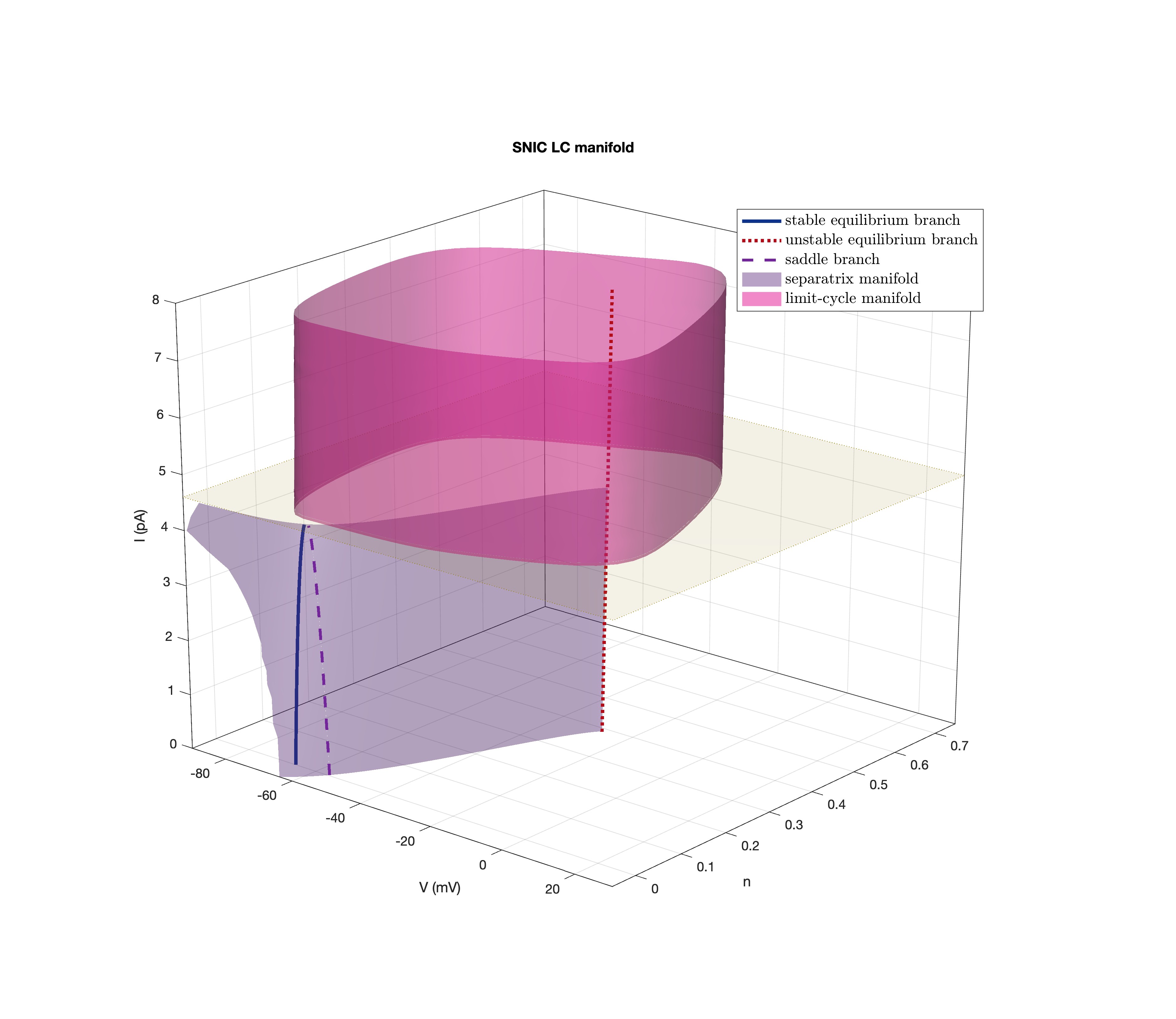
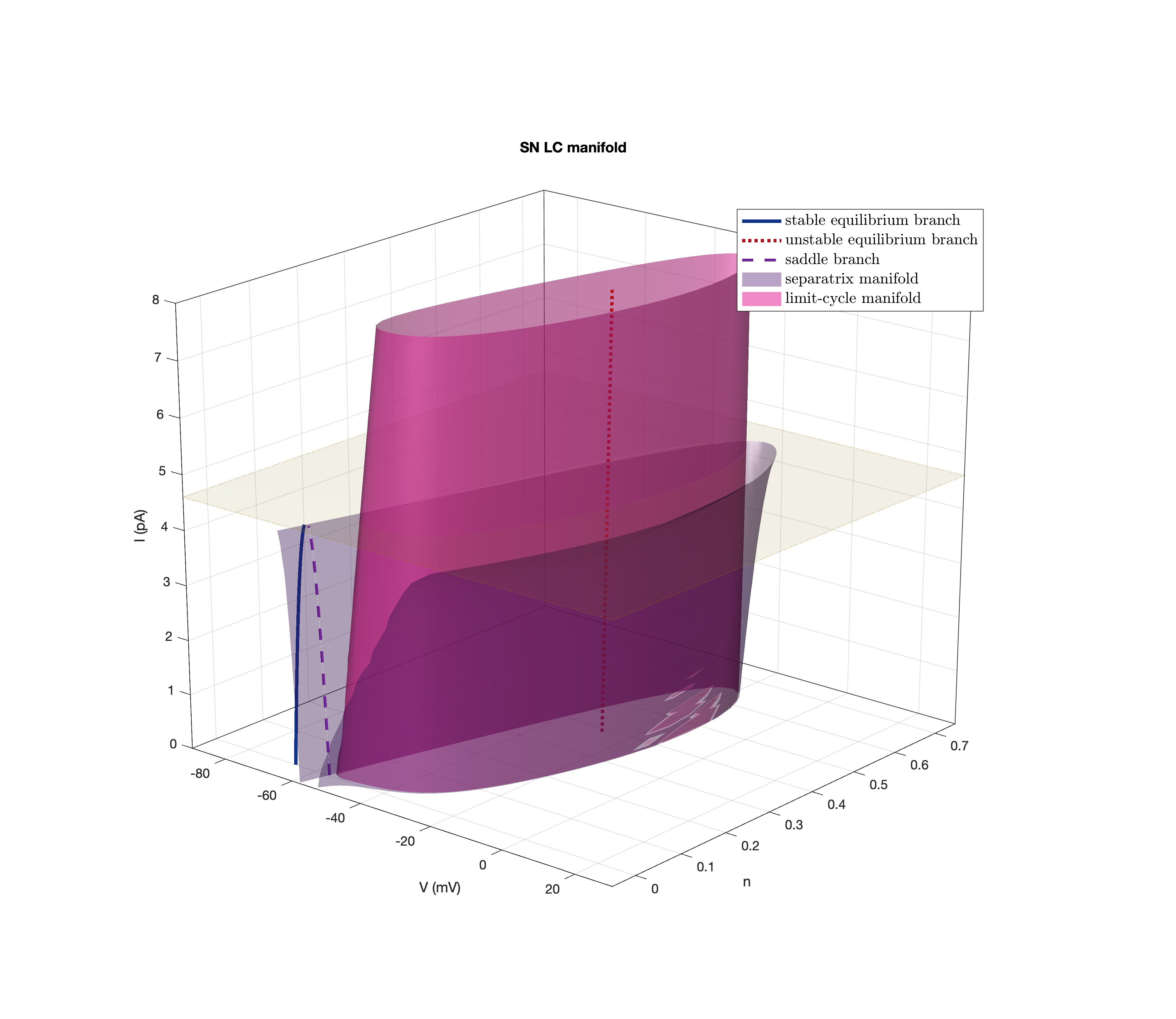
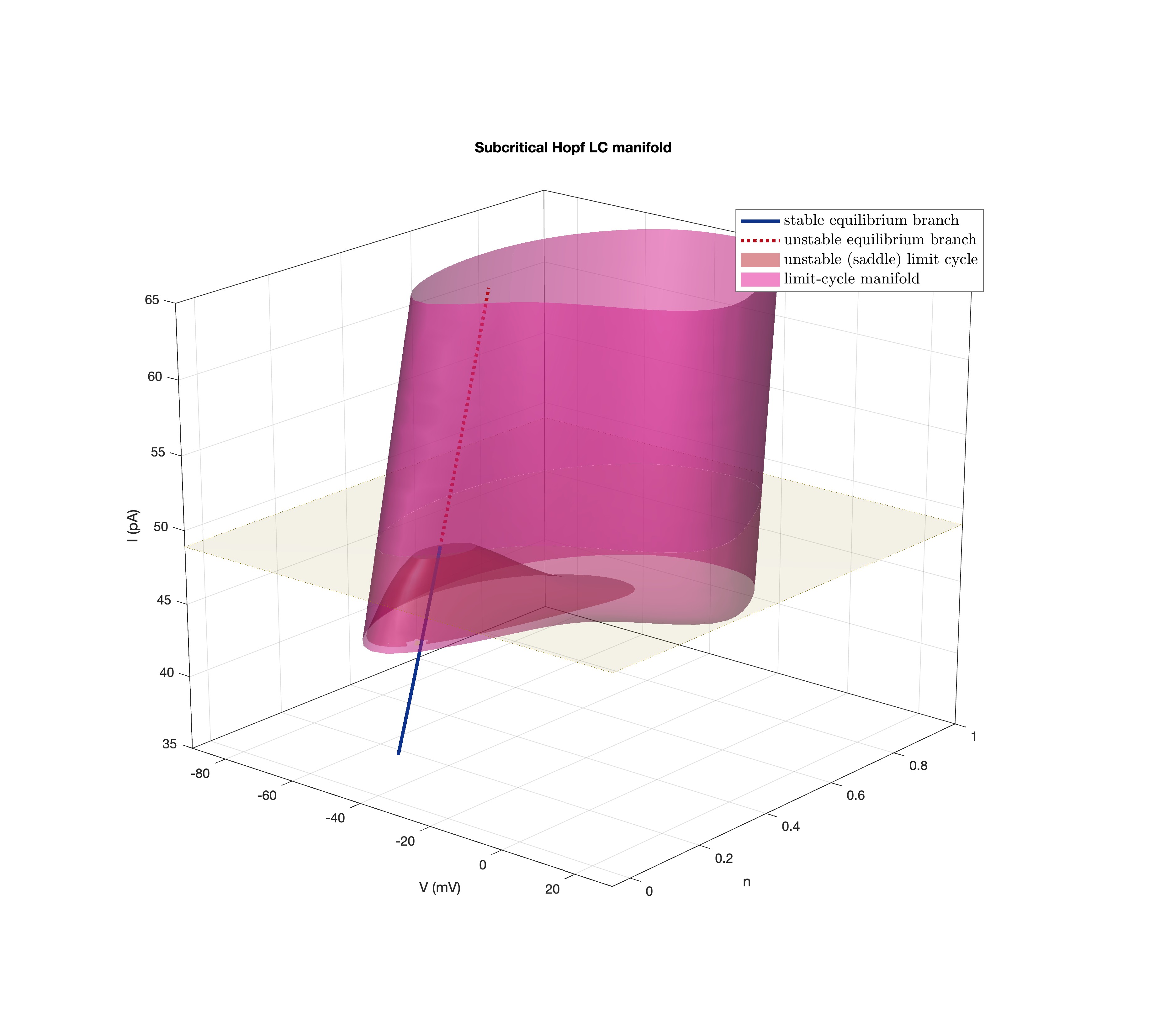
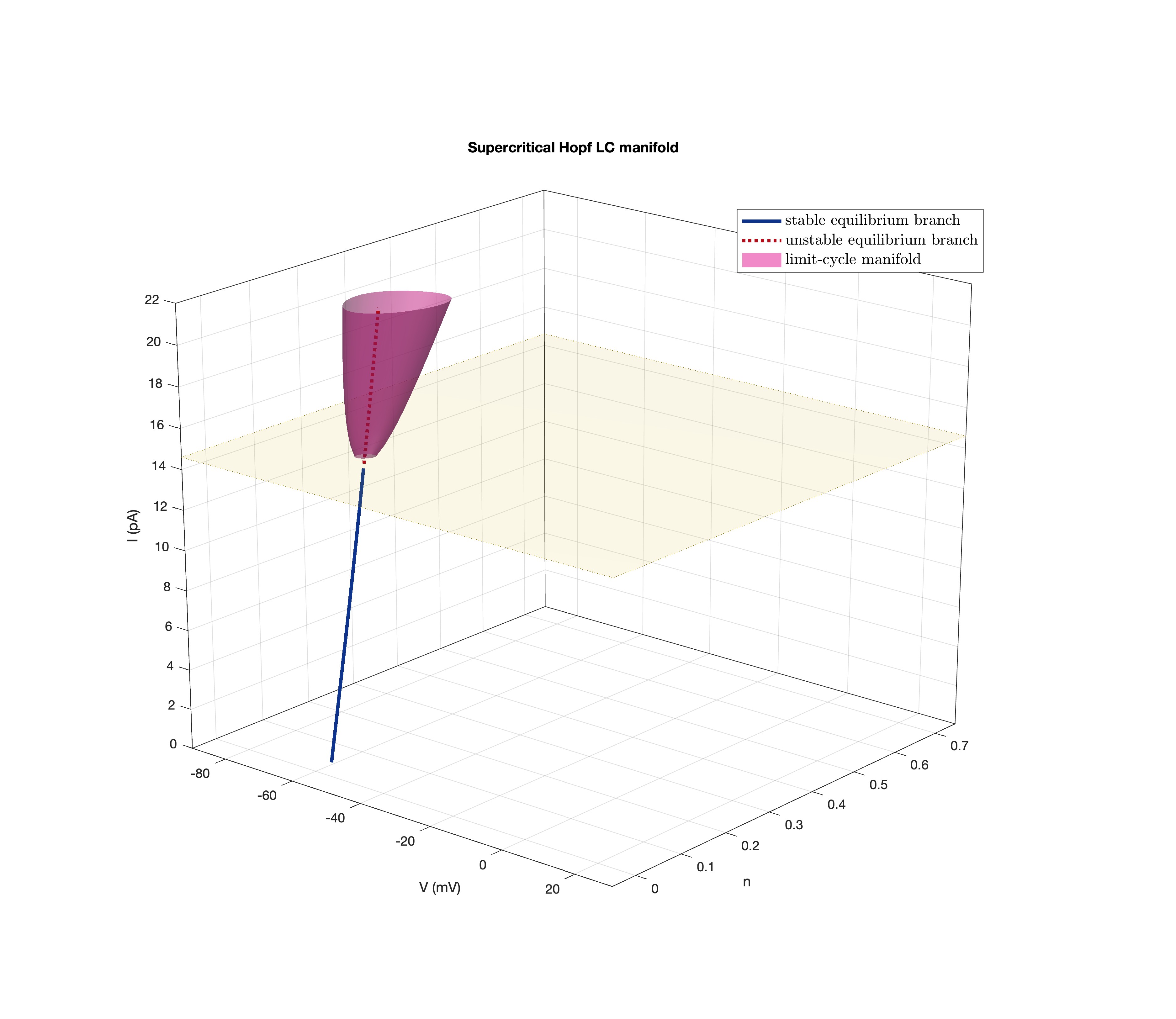
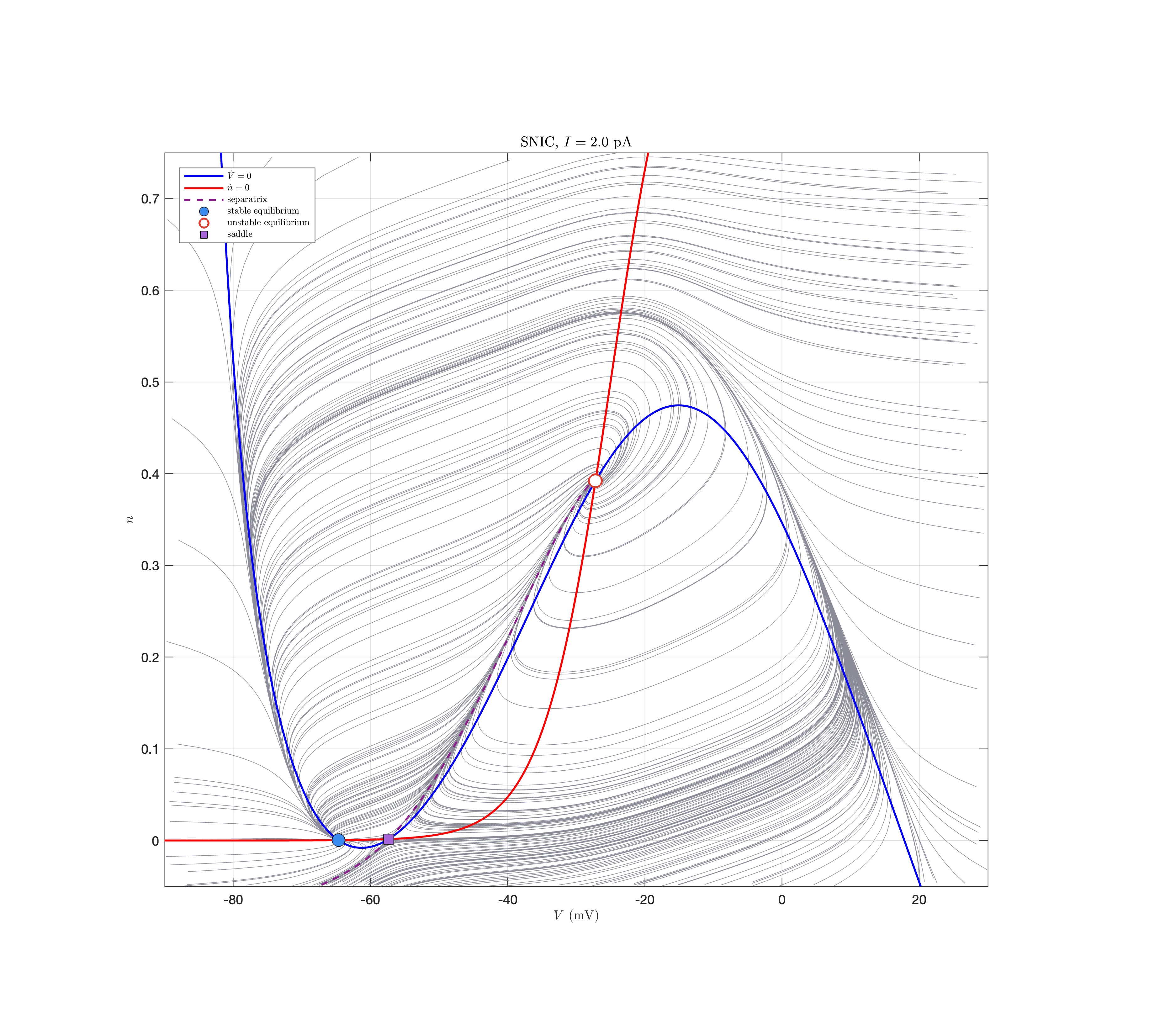
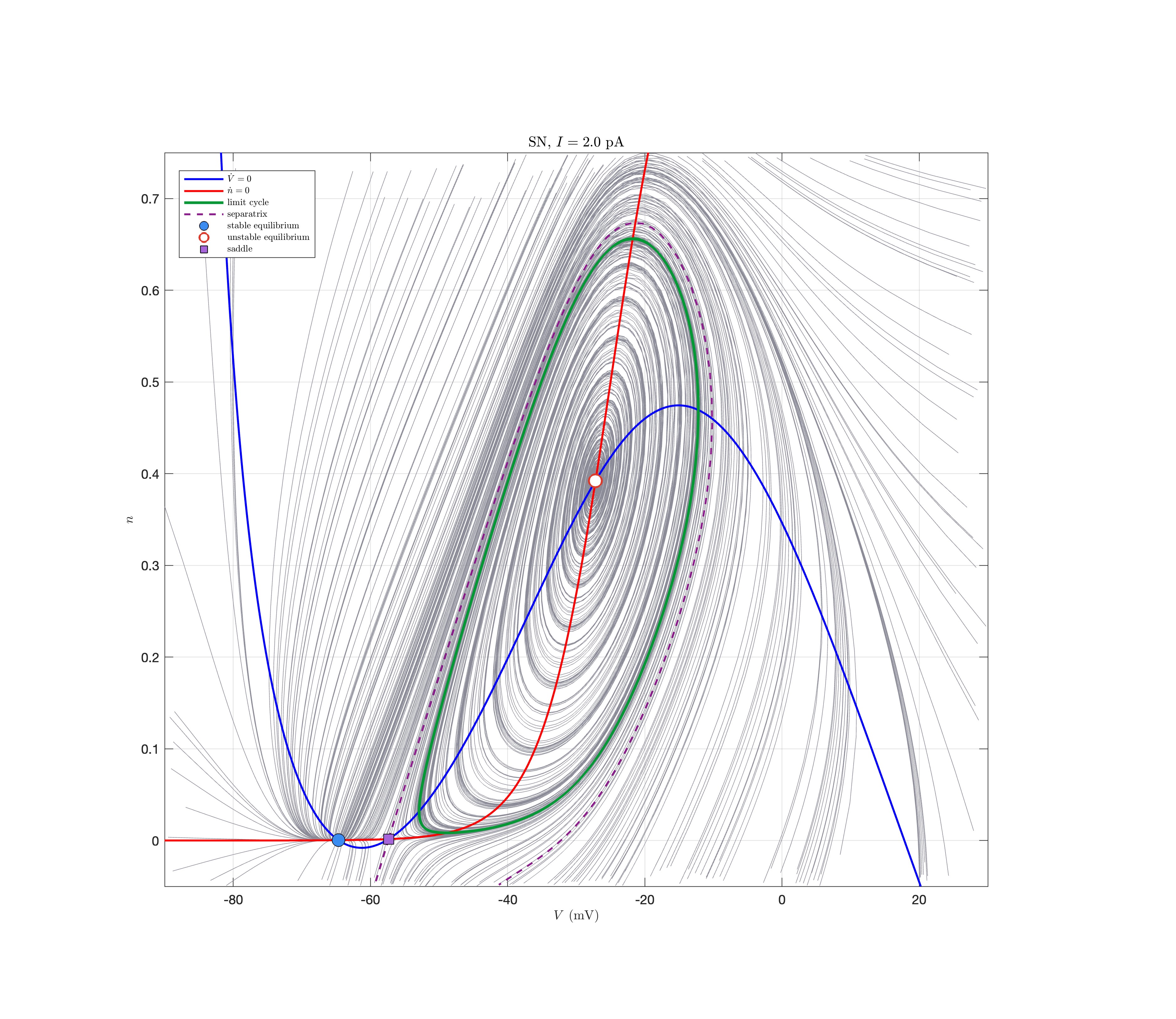
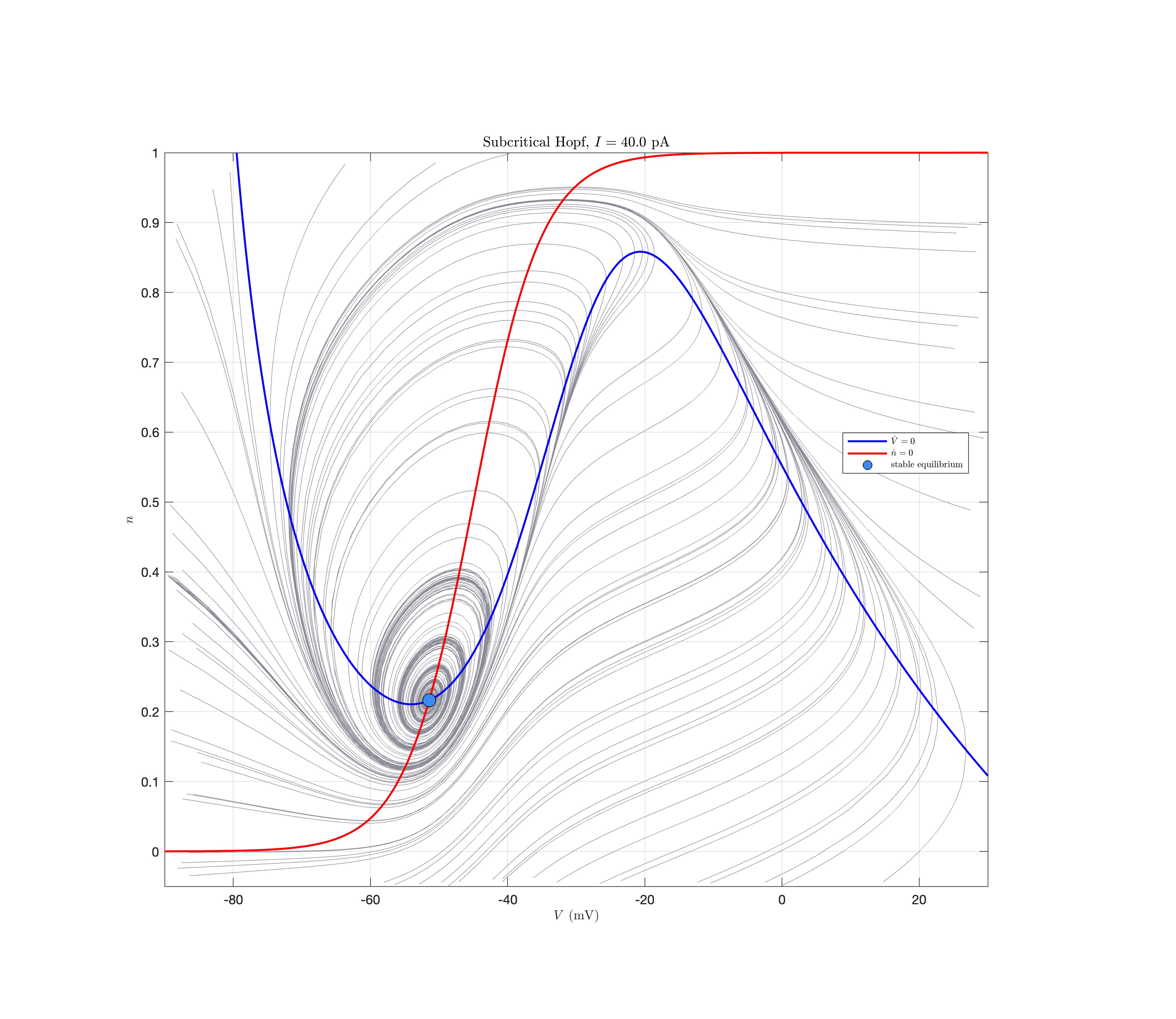
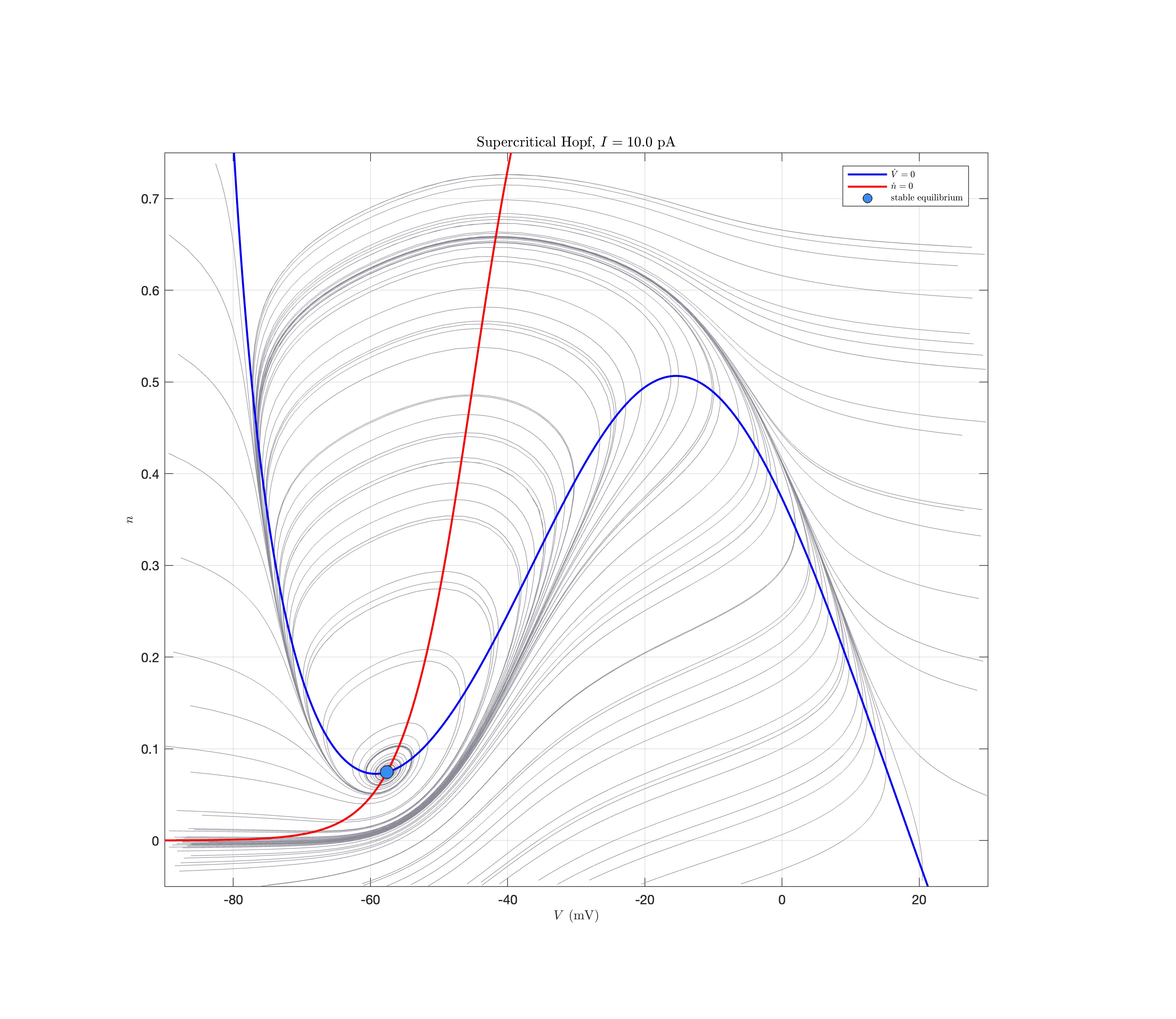
The book also explores how Ring Bank Theory might ground itself in known neural regimes—the four classical routes from rest to repetitive firing: SNIC, saddle‑node, subcritical Hopf, and supercritical Hopf. Each set of panels shows the same four regimes in the voltage–recovery plane.
Limit‑cycle manifolds
Spiking orbits stacked across injected current—see how the limit cycle is born in each regime.
Resting state
Phase portraits at low injected current—each model settles onto a stable resting equilibrium (SN is bistable b/w rest and firing).
Firing state
Phase portraits at higher injected current—each model spikes repetitively on a limit cycle.
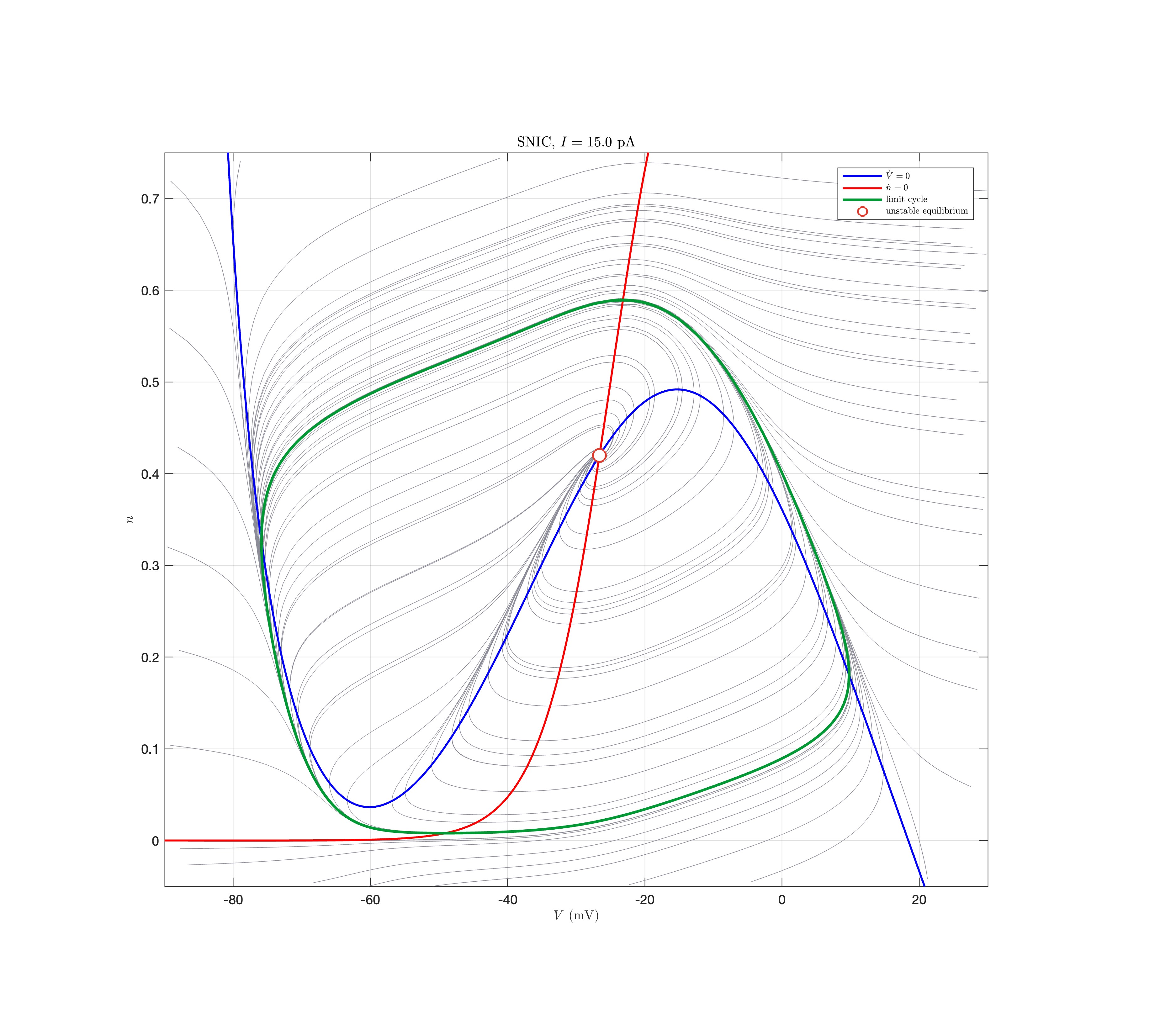
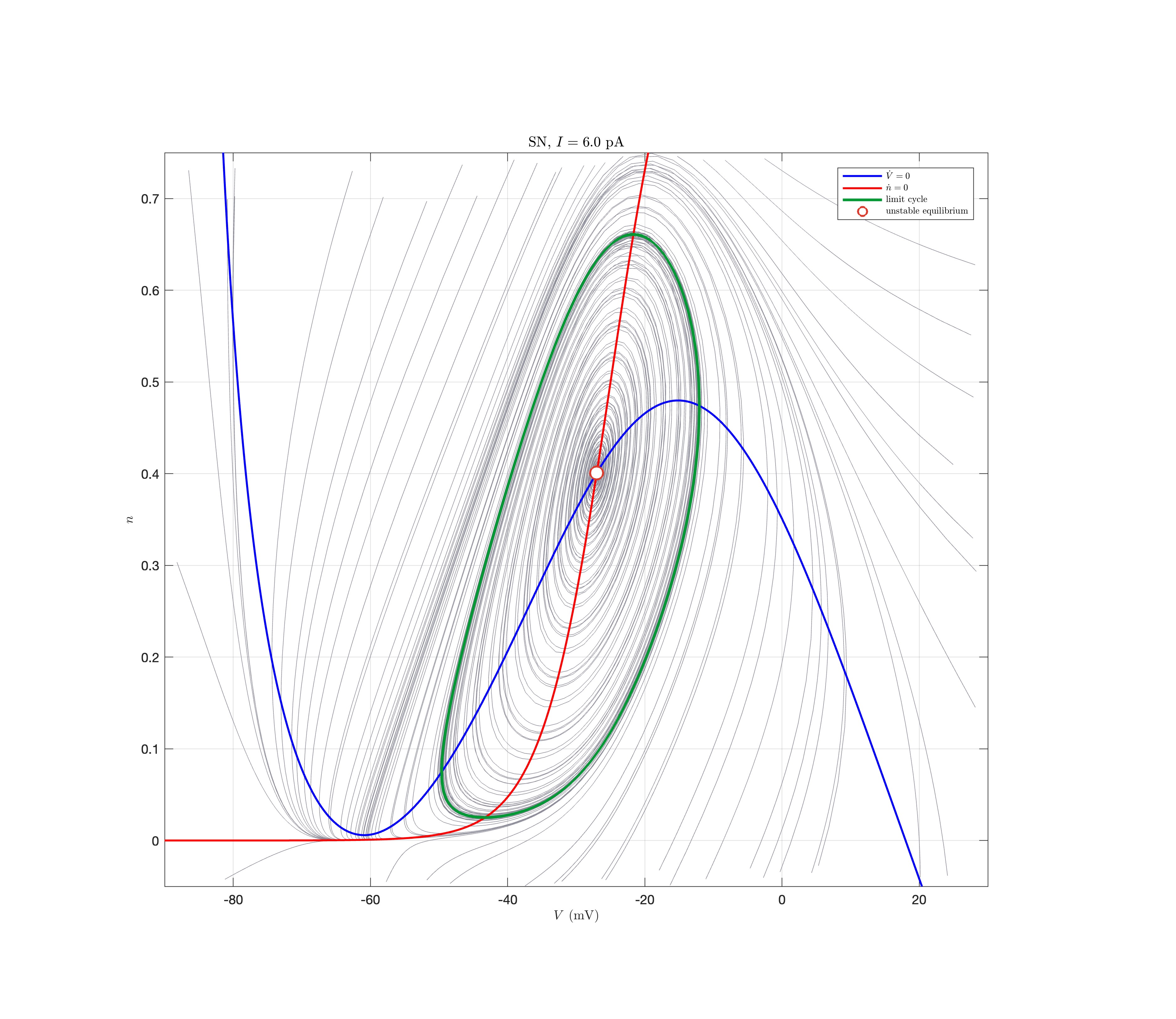
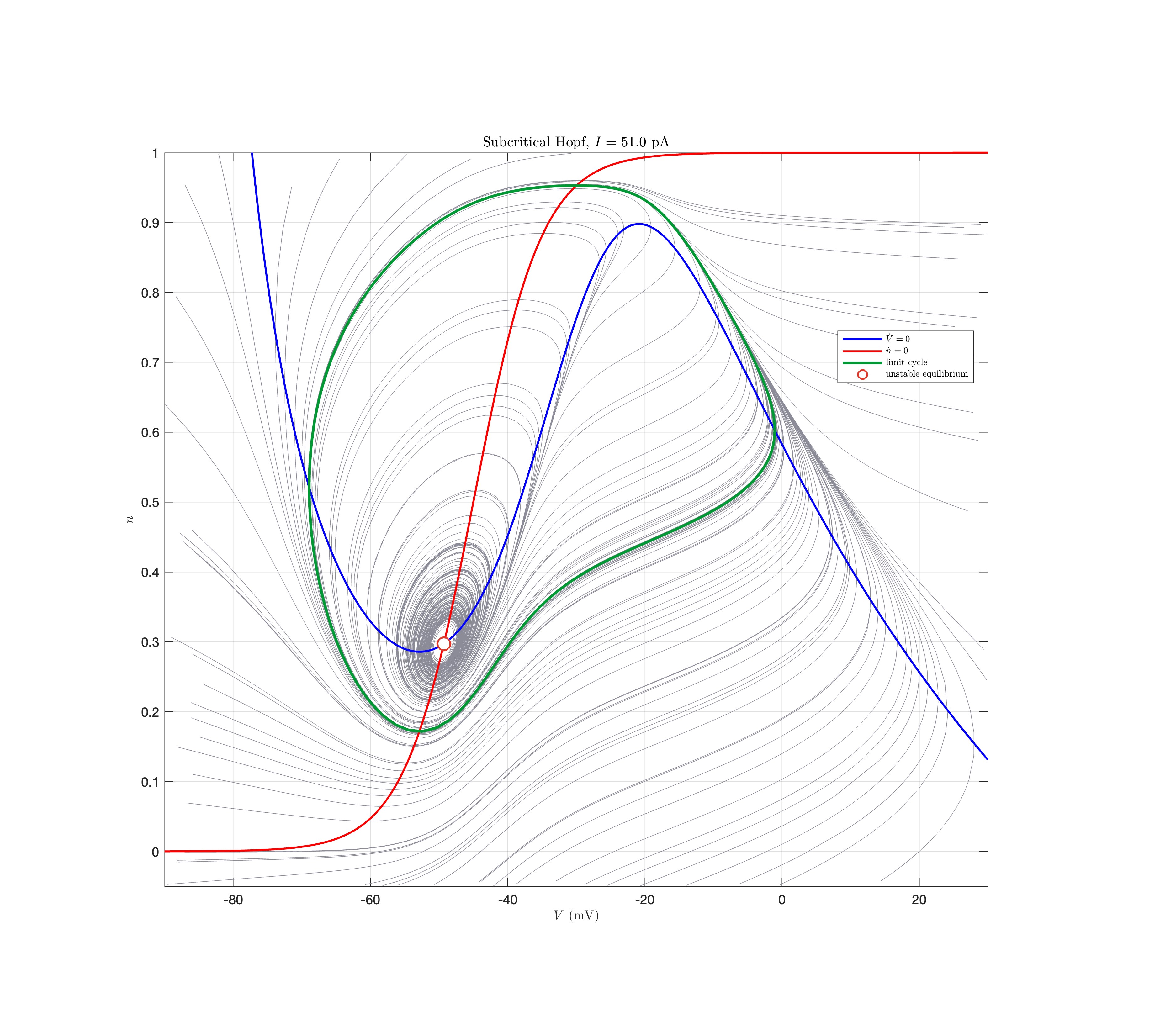
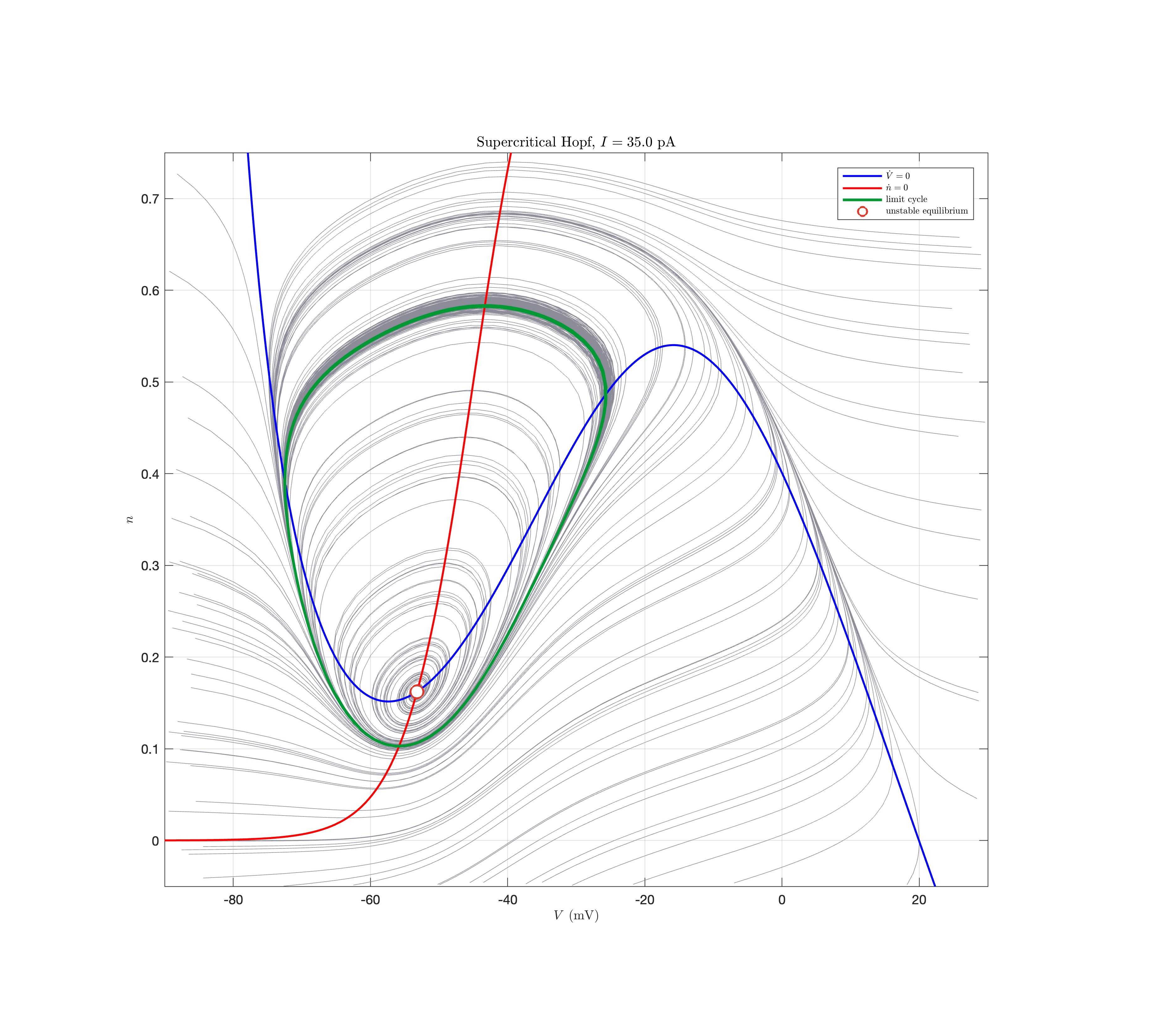
These are not mere illustrations—they’re testable hypotheses about how the geometry of the conscious moment could map onto neural dynamics. The book lays out the bridge.
Get the Book
Choose your format. The full‑color ebook is the fastest way in; the color hardcover is the deluxe edition for your shelf.

Hardcover · black & white interior
The most affordable hardcover, and the option that supports the author most. Scan the QR code or use the button.
Buy DirectFull Contents
The Theory Behind the Journal
This book is the companion phenomenology archive to the formal paper “Ring Bank Theory of Conscious Semiosis: Geometric Access, Baseline Dynamics, and Aboutness Modulation.” For the full body of work—papers, interactive demos, and data—visit the main Theories of Consciousness page.
How It Compares to Rings of Fire
An AI assessment (Anthropic’s Claude) rating this book against my earlier Rings of Fire (2022) across ten dimensions:

Generated by an AI language model at the author’s request; offered as an informal overview, not a peer review.
About the Author

Also by Brad Caldwell

Rings of Fire
How the Brain Makes Consciousness
Hardcover · Paperback · Kindle — all color
View on Amazon
Perceptual Optics
How the Brain Builds a 3D World from Light
Hardcover · Paperback · Kindle — all color
View on AmazonStay in the Loop
Leave your email for occasional updates on new Ring Bank Theory work, new editions, and related research.
No spam. Unsubscribe anytime.